
How it works · 5 min read
Texture matching, explained without the jargon
The reason you can spot most drywall patches from across the room has almost nothing to do with the filling and everything to do with the finish.
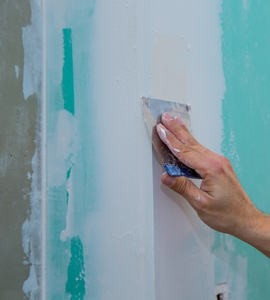
Your eye finds edges, not colour
People assume a visible patch is a paint problem. Usually it is a texture problem. A flat square inside a lightly textured wall catches light differently from every angle, and no amount of paint hides a change in surface.
Matching is a mixing problem
Getting knockdown or orange peel right means matching the thickness of the mix, the pressure of the spray and the timing of the knock-down pass. We test on a scrap board and hold it against your wall before anything is applied to the actual repair.
Blending outward matters as much
Even a perfect texture match will show if it stops in a hard line. The texture has to thin out over a wider area so there is no boundary for your eye to catch.
Not sure what you're looking at?
Send a photo. We will tell you honestly whether it is a repair, a plumber, or just paint.
Keep reading
Why the same drywall crack keeps coming back
You filled it, sanded it, painted it. A year later it is back in exactly the same line. Here is what is actually happening behind the paint.
There's a water stain on my ceiling. What now?
A brown ring overhead is a symptom, not a diagnosis. Here is how to work out whether you need a repair, a plumber, or just paint.